The History of 5 Lewes Crescent
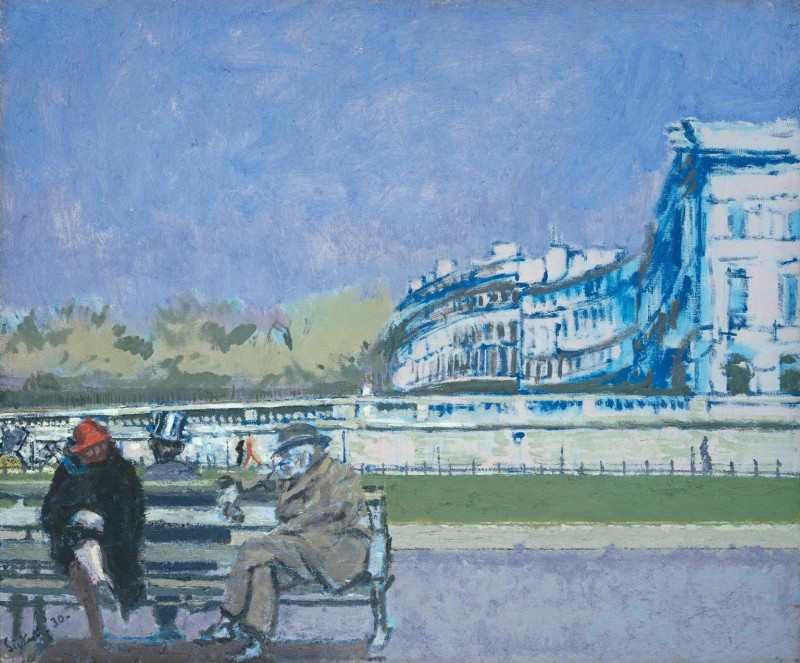
Walter Richard Sickert had a flat here in 1929
This house was the home of Lewis Cubitt, the younger brother of the Estate’s foremost builder Thomas Cubitt, from 1865 until his death in 1883. As a civil engineer and architect Lewis was involved in the design of both London Bridge and Kings Cross railway stations and also designed housing for some of Thomas’s development schemes. Born in 1799, Lewis is described in the 1871 census as a “retired architect” living in the house with his wife Sophia, daughter-in-law, grandson Thomas and five servants.
Lewis’s daughter Ellen had married Edgar Bowring – author, translator, civil servant and MP – and after Lewis’s death the Bowrings continued to be listed in street directories for the house until 1925. Edgar Bowring had previously been married to Thomas Cubitt’s daughter Sophia until her early death in 1857; he then married her cousin Ellen a year later.
Bowring had been prominent in the organisation of the Great Exhibition in 1851 and was made a Companion of the Order of the Bath. He sat as an MP (1868 - 1874) and was also a renowned translator of Goethe, Schiller and Heine. By 1890 the Bowrings had a home in Eaton Place, Belgravia, as well as Lewes Crescent. Edgar died in 1911 having been hospitalised with mental illness for several years; his widow and then his son continued to live in Lewes Crescent until 1925.
The house was then divided into flats; a resident in 1929 and 1931 was the artist Walter Sickert. He had visited Brighton much earlier in his career, most notably in 1915 when he stayed with a friend in Bedford Square, just opposite the West Pier, and painted Brighton Pierrots, a nighttime scene of beach entertainers. In 1926 Sickert married his third wife, the artist Therese Lessore, who had been born in Southwick, near Shoreham; Brighton would therefore have held memories for both Sickert and his wife, but there is no record of any works from these visits to Kemp Town.